Smile makeover
A smile makeover is a treatment plan rather than a procedure. It combines whatever is actually needed — whitening, bonding, veneers, crowns, gum contouring, sometimes orthodontics or implants — into one sequence designed to produce a coherent result. What distinguishes a good makeover from an expensive one is how much of it turns out to be unnecessary once the case is planned properly.
Delivered by: Dentist Saliha Yıldırım
Who it suits
- Patients with several concerns at once: colour, shape, spacing, worn edges, uneven gum line
- Patients with a mix of natural teeth and older restorations that no longer match
- Patients who have had piecemeal dentistry over the years and want it made coherent
- Patients preparing for a specific occasion, with realistic time to plan properly
- Anyone who wants the plan explained before committing to any of it
Who it does not suit
- Patients with active decay or untreated gum disease, which must be dealt with first
- Patients seeking an outcome that the underlying teeth and bite cannot support
- Patients wanting everything completed in two or three days
- Cases where a single small treatment would achieve most of what is actually wanted — and that should be said plainly
How the treatment works
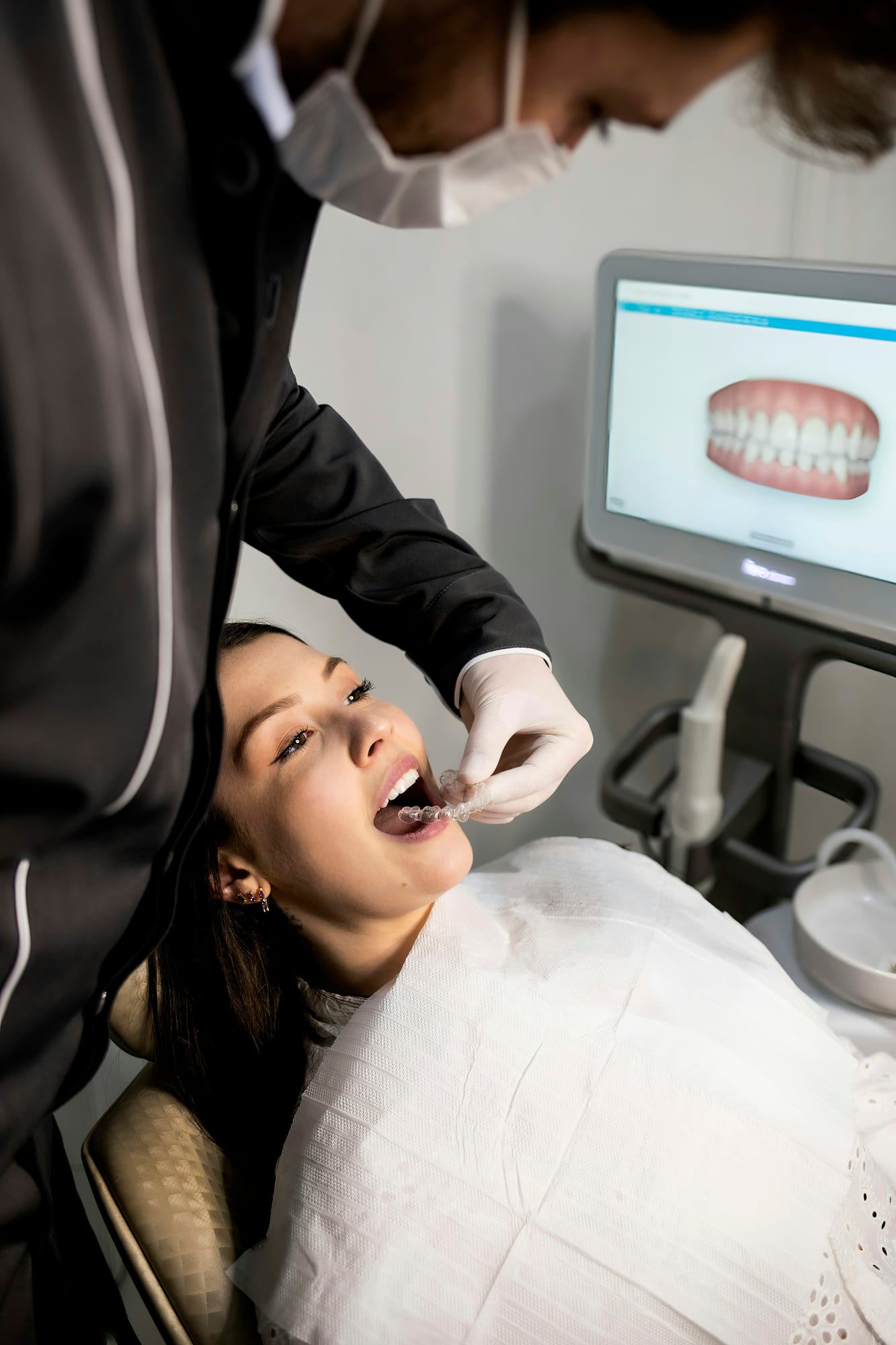
Assessment comes first: photographs, radiographs, gum health, bite, and a conversation about what specifically bothers you, which is often narrower than "everything". A design is then produced and previewed. Treatment is sequenced in clinical order — health first, then position, then colour, then shape — because doing it in any other order produces work that has to be redone.
Treatment stages
- 01
Full assessment
Decay, gum health, bite and existing restorations. Nothing cosmetic is planned on top of an unstable foundation.
- 02
Design and preview
A proposed result you can look at and react to, agreed before any treatment begins.
- 03
Preparatory treatment
Fillings, root canals, extractions or gum treatment, where needed. Sometimes this stage is most of the case.
- 04
Whitening
Carried out before any ceramic is made, because ceramic does not change shade afterwards and the natural teeth set the target.
- 05
Gum contouring
Where the gum line is uneven, it is corrected and allowed to settle before final impressions.
- 06
Restorative and cosmetic work
Bonding, veneers or crowns, made to the agreed design and fitted with the bite adjusted across the whole arch.
Materials and options
Composite
Direct bonding for smaller corrections, reversible and adjustable at the chair.
Glass-ceramic
For veneers and front crowns where translucency and optical realism matter most.
Zirconia
For back teeth and any restoration carrying heavy load, or where an underlying discolouration must be masked.
Recovery
Depends entirely on which components are involved. Whitening and bonding involve none. Gum contouring takes one to two weeks to settle. Veneers and crowns bring a few days of sensitivity. Implants introduce a healing period measured in months.
Aftercare
A makeover is only as durable as its maintenance. Regular hygiene appointments at home, a night guard if you grind, and prompt attention to anything that chips or feels different. Extensive ceramic work is not a finished object — it is something that needs looking after.
What affects the cost
- How many teeth are involved and which treatments each one needs
- Whether preparatory treatment is required first
- The materials chosen for each restoration
- Whether gum contouring is part of the plan
- Whether implants or orthodontics are involved, which change the scale entirely
- How many trips the sequence requires
Travel considerations
Cosmetic makeovers fit a single longer trip well, since the waiting is laboratory time rather than healing time. Where implants or extractions are part of the plan, the cosmetic work has to come last and the trip structure changes accordingly. The one thing worth insisting on is not compressing the schedule: a rushed try-in appointment is how people end up with a smile they did not quite agree to.
Alternatives
A single targeted treatment
Frequently whitening alone, or bonding on two teeth, achieves most of what a patient actually wanted. Worth establishing before planning anything larger.
Orthodontics
Where alignment is the underlying issue, moving teeth is more conservative than covering them.
Staged treatment over time
A makeover does not have to happen at once. Sequencing it over two or three years spreads both the cost and the commitment.
Risks and limitations
- Over-treatment, which is the principal risk of makeover dentistry: teeth prepared that did not need preparing
- Sensitivity following preparation of multiple teeth
- Chipping or fracture of ceramic over time
- Gum recession exposing restoration margins in later years
- A result that meets the design but not an expectation that was never made explicit — which is why the preview stage exists
- Irreversibility once enamel is removed
Common questions
How many teeth does a smile makeover involve?
Only as many as the design requires. Often it is the eight to ten teeth visible when you smile, but plenty of cases need work on two or three. A plan that treats every tooth regardless of what is wrong with them is a sales structure, not a clinical one.
Can it be done in one trip?
Cosmetic-only makeovers usually can, across roughly a week to ten days. Anything involving implants, extractions or grafting requires a healing period and therefore more than one trip.
Will I see the result before it is made?
Yes. A design preview is part of the process, and approving it is a step in the sequence rather than a courtesy.
How long does a makeover last?
Different components have different lifespans. Whitening fades within a year or two. Bonding lasts a few years. Ceramic restorations commonly last ten to fifteen years or more. Planning for maintenance is part of planning the makeover.
What if I do not like the result?
This is what the preview and try-in stages exist to prevent. Adjustments before final bonding are straightforward. After bonding, changes mean remaking restorations — which is exactly why nothing is bonded before you have seen it and said yes.
Related reading
Start with the assessment.
Send your photographs and a short description of what is bothering you. You will receive a first assessment and, where possible, a written preliminary plan — before any question of travel comes up.
Free of charge · No obligation · German, English or Turkish