Bone grafting
Bone grafting rebuilds jawbone that has been lost, so that a dental implant can be placed with enough bone around it to be stable. Bone in the jaw exists to carry teeth: once a tooth is gone, the bone that held it begins to shrink, and after years of a missing tooth or a long-worn denture there may not be enough left. A graft — using processed bone material, a membrane, and time — restores enough volume for an implant to work. A sinus lift is the specific version of this in the upper back jaw, where the floor of the sinus is raised to create height.
Delivered by: Dentist Saliha Yıldırım
Who it suits
- Patients whose imaging shows insufficient bone width or height at the planned implant site
- Patients who lost teeth years ago and have experienced the resorption that follows
- Long-term denture wearers, where bone loss is often pronounced
- Upper back jaw sites where the sinus has expanded into the space a root once occupied
- Sites where an extraction socket needs preserving so that an implant can be placed later
Who it does not suit
- Patients with active infection at the site, which must be resolved first
- Untreated periodontal disease
- Heavy smokers, in whom graft failure rates are significantly higher
- Patients on certain bone medications without specialist clearance
- Cases where a shorter or narrower implant, or a different implant position, avoids the need entirely — which is always worth checking before agreeing to a graft
How the treatment works
Under local anaesthetic, the gum is opened and graft material is placed where bone volume is needed, usually covered with a protective membrane and closed. Over several months the body replaces the graft material with its own bone. For a sinus lift, the sinus membrane is carefully lifted and graft material placed beneath it. Where the deficit is small, grafting can sometimes be carried out at the same appointment as implant placement; larger deficits need to heal before the implant goes in.
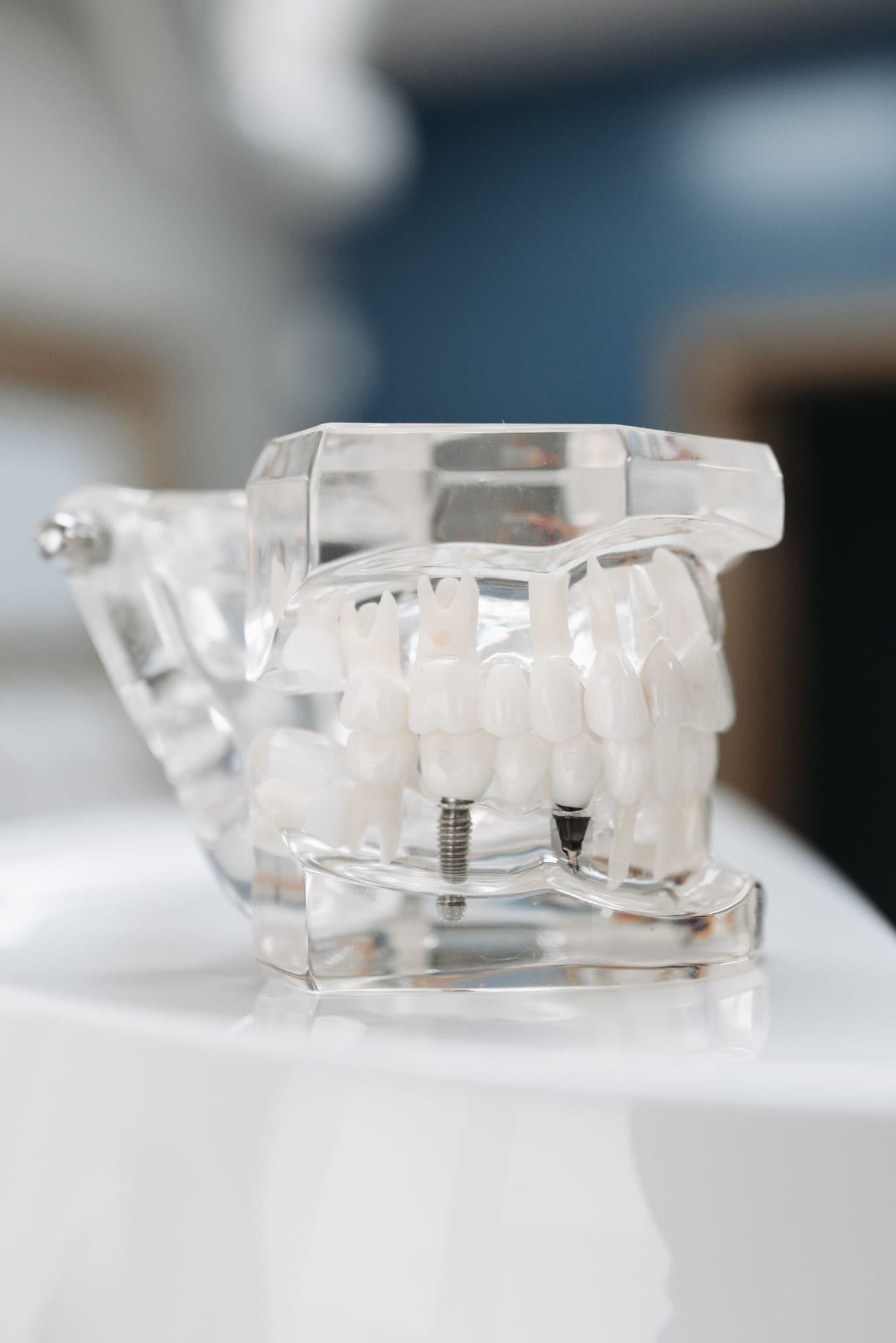
Treatment stages
- 01
Imaging and measurement
Three-dimensional imaging shows exactly how much bone is present and where. This is measurement, not estimation, and it determines whether grafting is genuinely required.
- 02
The graft procedure
Carried out under local anaesthetic. Graft material and a membrane are placed and the site is closed. Typically 45 to 90 minutes depending on extent.
- 03
Healing
Four to nine months while your own bone replaces the graft material. Longer for a sinus lift or an extensive graft.
- 04
Reassessment
Repeat imaging confirms that enough bone has formed before implant placement is planned.
- 05
Implant placement
The implant is then placed into the rebuilt site and follows the normal integration timeline from there.
Materials and options
Graft material
Processed bone substitute material is used as a scaffold for your own bone to grow into. The specific material is named in your treatment plan.
Membrane
A resorbable barrier membrane holds the graft in place and stops gum tissue growing into the space where bone is meant to form.
Recovery
Swelling and discomfort for several days, more pronounced than a simple extraction and typically peaking on the second or third day. Bruising is common. After a sinus lift you will be asked not to blow your nose, sneeze with a closed mouth, fly if avoidable in the immediate days, or use a straw. Soft diet for a week or more.
Aftercare
The healing months are when the graft either takes or does not, and smoking is the single largest controllable risk to that. Keep the site clean as instructed, complete any prescribed medication, and attend the reassessment imaging before implant placement is planned.
What affects the cost
- The extent of bone that needs rebuilding
- Whether a sinus lift is involved and whether it is approached laterally or through the implant site
- The quantity and type of graft material required
- Whether grafting is carried out separately or at the same time as implant placement
- The number of sites being grafted
Travel considerations
Grafting is the stage that most often changes a travel plan, which is exactly why it is assessed from imaging before you book anything. If a graft needs to heal before the implant, that means an extra trip and several extra months, and it is better to know that at the planning stage than after arrival. Note also that flying shortly after a sinus lift is generally discouraged — your return date will be set with that in mind.
Alternatives
Short or narrow implants
In some sites a shorter or narrower implant avoids grafting entirely. Worth asking about explicitly before agreeing to a graft.
Angled implant placement
The principle behind full-arch treatment: angling implants to reach available bone rather than building new bone.
Bridge or denture
Where grafting is not desirable, a conventional bridge or removable denture remains a legitimate option.
Risks and limitations
- Partial or complete graft failure, requiring the procedure to be repeated
- Infection at the graft site
- Membrane exposure through the gum during healing
- Perforation of the sinus membrane during a sinus lift, which is usually managed at the time but may postpone the procedure
- Sinus infection following a sinus lift
- Longer overall treatment time and an additional trip
- Persistent swelling or bruising for longer than expected
Common questions
Do I definitely need a bone graft?
Only if your imaging shows there is not enough bone for a stable implant. Ask to be shown the measurement. In some sites a shorter implant or a different angle avoids grafting altogether, and a practice should be willing to explain why it is not an option for you.
How much does grafting delay my treatment?
A graft that must heal before implant placement adds roughly four to nine months, and generally one additional trip. A small graft placed at the same time as the implant adds nothing to the timeline.
Is a sinus lift dangerous?
It is a routine procedure with a well-documented complication profile. The most common complication is perforation of the sinus membrane, which is usually managed during the procedure itself. Sinus infection afterwards is uncommon but possible.
What material is used?
A processed bone substitute acting as a scaffold for your own bone. The specific material is named in your treatment plan, and you are entitled to ask what it is and where it comes from before consenting.
Can I fly after a sinus lift?
Flying immediately after a sinus lift is generally discouraged because of the pressure changes. Your return travel will be scheduled with that in mind, which is one more reason to plan flights after the treatment sequence rather than before.
Start with the assessment.
Send your photographs and a short description of what is bothering you. You will receive a first assessment and, where possible, a written preliminary plan — before any question of travel comes up.
Free of charge · No obligation · German, English or Turkish