Dental implants
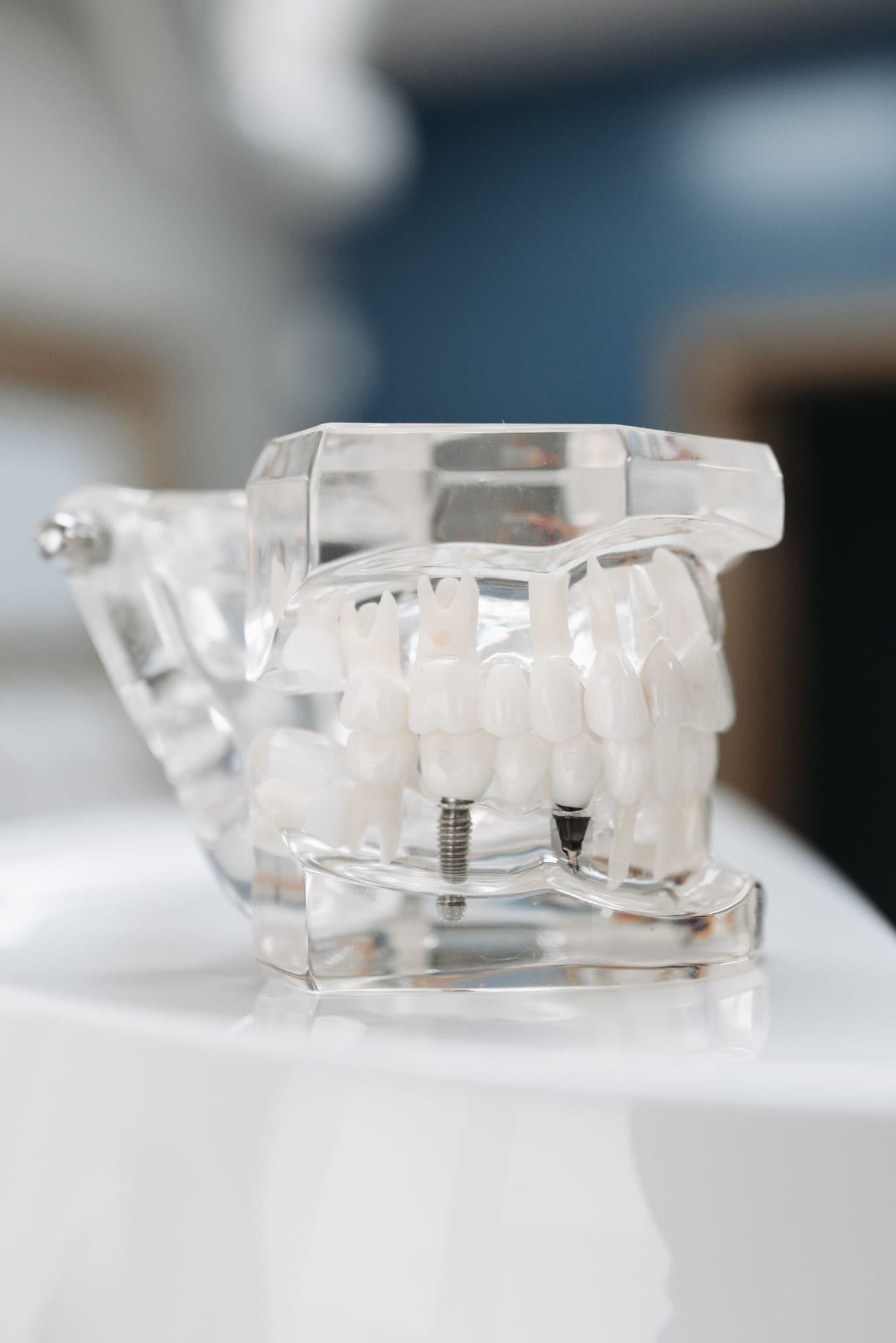
A dental implant is a small titanium screw placed into the jawbone to take the place of a missing tooth root. Once the bone has grown onto its surface — a process called osseointegration — the implant can carry a crown, a bridge or a full arch of teeth. It is the only replacement that transmits chewing forces into the bone the way a natural root does, which is why the bone around it stops shrinking. What an implant is not is a quick fix: the biology takes months, and no amount of scheduling pressure changes that.
Delivered by: Dentist Saliha Yıldırım
Who it suits
- Adults with one, several or all teeth missing in a jaw
- Patients with enough bone volume, or enough bone that grafting can make the site viable
- Patients with healthy gums, or gum disease that has been brought under control first
- People who find a removable denture unstable, uncomfortable or simply intolerable
- Patients who want to avoid grinding down healthy neighbouring teeth for a conventional bridge
Who it does not suit
- Patients with untreated periodontal disease — implants fail in inflamed tissue
- Adolescents whose jaw growth is not yet complete
- Heavy smokers, unless they are willing to stop around the surgical phase; smoking measurably increases failure
- Poorly controlled diabetes, which impairs healing at exactly the stage that matters
- Patients taking certain bone medications, particularly intravenous bisphosphonates or denosumab, without specialist clearance
- Patients undergoing radiotherapy to the head and neck, or recently finished, without oncological clearance
How the treatment works
Planning starts with radiographs and, for most implant cases, three-dimensional imaging that shows how much bone is available and where the nerves and sinuses run. The implant is placed under local anaesthetic through a small opening in the gum. It is then left to integrate, typically for three to six months depending on the site and bone quality. Once integration is confirmed, an abutment is fitted and the final crown, bridge or arch is made and attached.
Treatment stages
- 01
Assessment and imaging
Clinical examination, radiographs and where indicated a three-dimensional scan. Bone volume, bone quality, gum health and the position of anatomical structures decide what is possible.
- 02
Preparatory treatment
Gum disease is treated, unsaveable teeth are removed and, where the bone is insufficient, grafting or a sinus lift is carried out. This stage is often what determines the eventual result.
- 03
Implant placement
The implant is placed under local anaesthetic. Most single-implant appointments take under an hour. A temporary restoration is provided where the gap is visible.
- 04
Healing and integration
Three to six months while bone grows onto the implant surface. This is when you go home — the healing does not need you to be in Ankara.
- 05
Abutment and impression
Once integration is confirmed, the connecting abutment is fitted and impressions or a digital scan are taken for the final restoration.
- 06
Final restoration
The crown, bridge or arch is fitted, the bite is adjusted and you receive written aftercare instructions and documentation of the components used.
Materials and options
Straumann
A Swiss system with one of the longest documented research records in implantology and worldwide component availability. Usually the choice where the case is demanding or where the patient expects to keep the restoration for decades.
Hiossen
A widely used system with a well-established surface technology and a substantial clinical literature, positioned between the premium and value tiers.
Osstem
One of the highest-volume implant systems in Asia and Europe, with broad documentation and a lower cost per implant.
Local system
A Turkish-manufactured system, the most economical option. Reasonable for straightforward sites; the trade-off is a shorter research history and narrower component availability outside Türkiye.
The four implant systems we work with
The implant itself is a choice you get to make. The systems below differ in documented research history, surface technology and long-term component availability — not in whether they are "good" or "bad". Which one suits you depends on your bone, your medical history and how long you expect to keep the restoration.
Straumann
A Swiss system with one of the longest documented research records in implantology and worldwide component availability. Usually the choice where the case is demanding or where the patient expects to keep the restoration for decades.
Hiossen
A widely used system with a well-established surface technology and a substantial clinical literature, positioned between the premium and value tiers.
Osstem
One of the highest-volume implant systems in Asia and Europe, with broad documentation and a lower cost per implant.
Local system
A Turkish-manufactured system, the most economical option. Reasonable for straightforward sites; the trade-off is a shorter research history and narrower component availability outside Türkiye.
Recovery
Swelling and discomfort for two to four days after placement, manageable with ordinary painkillers. Soft food for about a week. Most people return to work within two or three days, though anything strenuous should wait a week. Bruising is common and unalarming after multiple placements or grafting.
Aftercare
Implants do not decay, but they can be lost to gum disease around them — peri-implantitis — which behaves like periodontal disease and is the main long-term cause of failure. That means thorough daily cleaning around the implant, interdental brushes where the shape allows, and professional cleaning at home at the interval your dentist recommends. You will leave with written instructions and a record of which components were placed, so any dentist can work on it later.
What affects the cost
- Which implant system is used — the four available differ substantially in cost
- How many implants are needed
- Whether bone grafting or a sinus lift is required
- Whether teeth need to be extracted first
- The type of final restoration: single crown, bridge or full arch
- Whether a temporary restoration is needed during healing
- Whether existing gum disease has to be treated before surgery
Travel considerations
Implant treatment is the clearest case for planning travel around biology rather than the other way round. The healing months between placement and restoration are spent at home, so two separate trips are normal and should be budgeted for from the start. Flights, accommodation and transfers for both trips can be arranged as one coordinated itinerary and are quoted separately from the treatment itself.
Alternatives
Conventional bridge
Faster and cheaper, but it requires grinding down the healthy teeth on either side of the gap and does nothing to stop the bone under the gap from shrinking.
Removable partial denture
The least invasive and least expensive option. Less stable, and most patients who have worn one are the reason they end up asking about implants.
Full-arch implants
Where most or all teeth in a jaw are missing, one fixed bridge on several implants is usually more appropriate than replacing teeth individually.
Leaving the gap
Legitimate for a single missing back tooth in some cases, though neighbouring teeth tend to drift and the opposing tooth over-erupts. Worth discussing honestly rather than dismissing.
Risks and limitations
- Failure to integrate, in which case the implant is removed and the site is allowed to heal before a further attempt
- Infection at the surgical site, usually treatable but occasionally costing the implant
- Peri-implantitis in the years afterwards, driven mainly by plaque control and smoking
- Nerve involvement in the lower jaw, which can cause temporary or, very rarely, lasting numbness of the lip or chin
- Sinus involvement in the upper jaw, which is why a sinus lift is proposed where the bone height is inadequate
- Mechanical problems over time: screw loosening, or fracture of the crown or a component
An implant is three parts.
Before treatment starts you should be able to see what goes where. The four models below are what the laboratory actually makes.
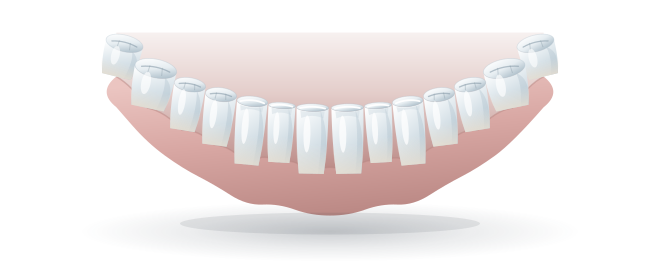
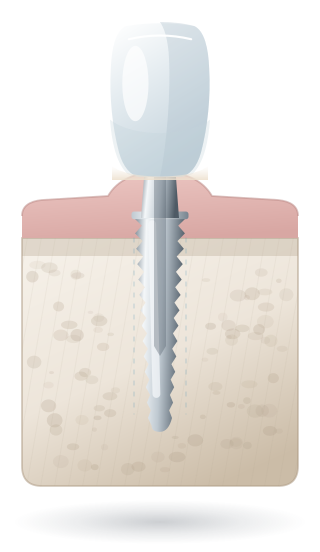
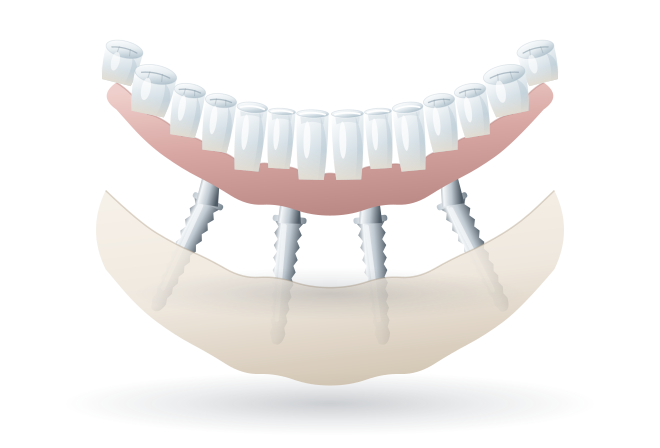
Full arch study model
Fourteen teeth planned as one arch, not as fourteen separate decisions.
Common questions
How long do dental implants last?
Implants placed in healthy bone and kept clean routinely last well over ten years, and many last decades. The crown or bridge on top has a shorter life than the implant beneath it and may need replacing at some point. Anyone quoting you a guaranteed lifespan is selling, not informing.
Is placing an implant painful?
The placement itself is done under local anaesthetic and is not painful. The two to four days afterwards involve swelling and soreness comparable to a difficult extraction, and ordinary painkillers are normally enough.
Can I have an implant and crown in the same week?
Occasionally, where bone quality allows immediate loading, though the definitive restoration usually still comes later. For most patients the honest answer is no — the bone needs months, and compressing that to fit a single trip is how implants get lost.
Which implant system should I choose?
It depends on the site, your bone, your medical history and how long you expect to keep the restoration. Straumann has the longest research record and the best worldwide component availability; the local system is the most economical. The recommendation and the reasoning are both in your written plan.
What if the implant fails?
A failed implant is removed, the site is allowed to heal, and placement can usually be attempted again after a few months, sometimes with grafting. This is uncommon but it is a real outcome, and it should be discussed before treatment rather than after.
Do I need a bone graft?
Only if the bone at the site is too narrow or too short to hold an implant securely. This is decided from the state of the bone rather than from a general rule — judged on the imaging together with the examination — and it will be stated explicitly in your plan.
Start with the assessment.
Send your photographs and a short description of what is bothering you. You will receive a first assessment and, where possible, a written preliminary plan — before any question of travel comes up.
Free of charge · No obligation · German, English or Turkish